
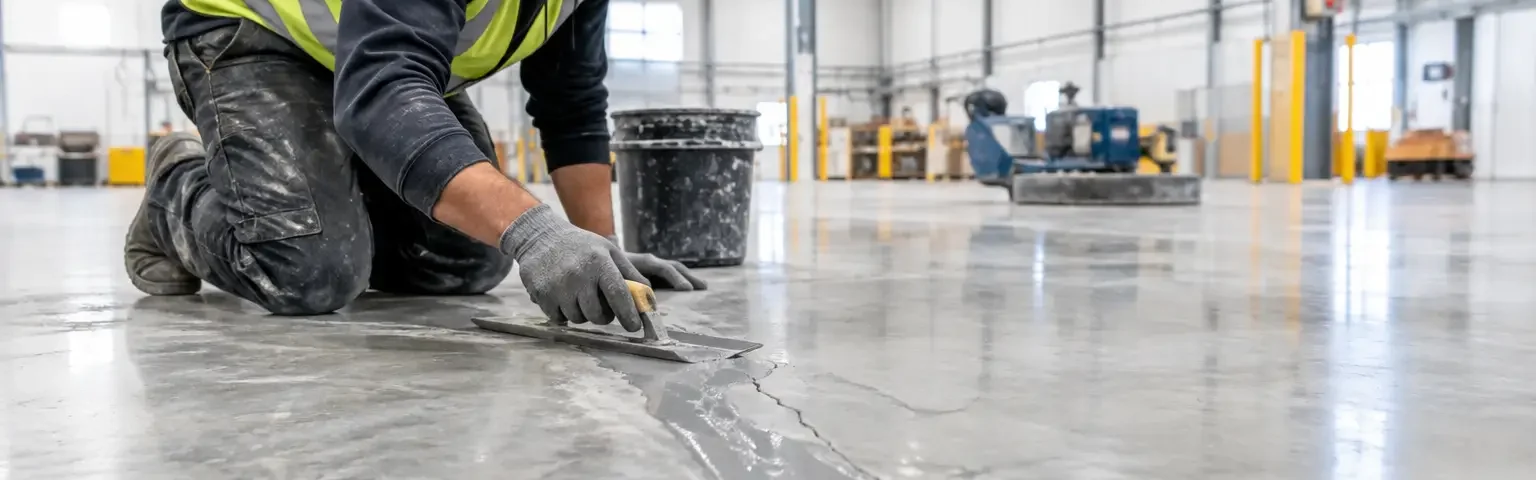
A floor that performs well at room temperature can fail quickly when it is hit with hot washdown water, cold process conditions, or rapid temperature swings. Understanding how to prevent thermal cracking starts with treating concrete and flooring as a system – not simply placing a slab and applying a coating after damage appears.
For commercial and industrial facilities, thermal cracking can create more than a cosmetic problem. Cracks allow water, chemicals, and contaminants into the slab. They can compromise sanitation, accelerate concrete deterioration, loosen coatings, and create trip or forklift traffic concerns. In food processing, breweries, commercial kitchens, cold storage, and manufacturing plants, the right preventive work needs to begin with an honest assessment of service conditions.
What Causes Thermal Cracking in Concrete Floors?
Concrete changes dimension as its temperature changes. When a slab heats up, it expands. When it cools, it contracts. Thermal cracking occurs when that movement is restrained or when different portions of the floor change temperature at different rates.
A common example is a processing area where a cold slab receives hot water during washdown. The surface heats and expands faster than the concrete below it. That creates stress through the slab depth. The reverse can also happen when a warm floor is exposed to cold water, refrigeration conditions, or a sudden temperature drop.
Thermal movement becomes more damaging when the concrete already has weaknesses. Existing shrinkage cracks, deteriorated joints, poor subbase support, moisture intrusion, inadequate curing, and incompatible repair materials can all turn normal movement into visible failure. A rigid topping or coating may crack or delaminate if it cannot accommodate the movement of the substrate underneath.
Not every crack is thermal cracking. Some result from drying shrinkage, structural movement, impact, settlement, overload, or corrosion-related deterioration. The distinction matters because a repair that addresses the wrong cause may look acceptable at turnover and fail again under operating conditions.
How to Prevent Thermal Cracking Before Installation
The most cost-effective solution is to account for temperature exposure during design, slab placement, and flooring selection. Facility owners, engineers, general contractors, and flooring contractors should define how the area will actually be used before choosing a repair or protection system.
Start with operating temperatures, not assumptions
Document the expected temperature range of the slab and the materials that contact it. This includes process water temperature, washdown frequency, steam exposure, refrigeration cycles, freezer thresholds, hot equipment, chemical cleaning procedures, and the time between temperature changes.
A warehouse with occasional ambient fluctuations does not need the same system as a protein processing room receiving daily hot-water sanitation. Likewise, a brewery floor exposed to warm liquids and cleaning chemicals has different demands than a dry manufacturing aisle. The floor specification should follow the operating environment, not a generic product preference.
Use an appropriate concrete mix and placement plan
Concrete with excessive water, inconsistent batching, poor consolidation, or uncontrolled finishing is more likely to develop weaknesses that later respond poorly to thermal stress. The mix design should provide the required strength, durability, and workability without adding unnecessary water on site.
Placement conditions matter as well. Large slab pours require planning for ambient temperature, concrete temperature at delivery, placement sequence, finishing timing, and curing protection. Hot-weather placement can increase evaporation and shrinkage risk. Cold-weather placement can delay strength development and create separate curing challenges.
For new construction, the project team should coordinate slab thickness, reinforcement, subbase condition, vapor mitigation requirements, and joint layout before concrete is placed. These elements do not eliminate thermal movement, but they help manage it predictably.
Plan joints to control movement
Concrete will crack somewhere. Properly installed control joints provide a planned location for shrinkage and movement rather than allowing random cracks to develop across traffic lanes or sanitary areas.
Joint spacing, depth, timing, and layout should suit the slab design and geometry. Long uninterrupted pours, re-entrant corners, door openings, columns, drains, and equipment foundations are common stress concentrators. Joints should also be located with forklift routes, rack legs, cleanability requirements, and floor coating transitions in mind.
In industrial settings, joints need ongoing attention. Broken edges, failed sealants, and unsupported joint shoulders can allow impact damage and moisture entry. Joint repair is not a cosmetic add-on. It is a maintenance item that protects slab edges and helps keep thermal and operational stresses from spreading into the surrounding concrete.
Cure concrete thoroughly and consistently
Curing is one of the most overlooked parts of crack prevention. Fresh concrete needs adequate moisture and temperature control to develop strength and reduce early-age shrinkage stress. When curing is rushed or inconsistent, the slab may have a weaker surface, more internal stress, and a greater likelihood of later cracking.
The right curing method depends on the slab, project schedule, and future flooring system. Some curing compounds can interfere with the bond of resinous flooring or repair materials and may require removal through mechanical surface preparation. That is why slab placement and flooring installation should be coordinated rather than handled as unrelated scopes.
Select Flooring Systems That Handle Thermal Shock
Where rapid temperature changes are part of daily operation, a conventional coating may not be the right answer. Thin, rigid systems can be useful in dry or moderate-duty spaces, but they may not tolerate repeated thermal shock in wet processing environments.
Urethane cement flooring is often specified for facilities exposed to hot washdowns, steam, moisture, chemicals, and thermal cycling. Its coefficient of thermal expansion is closer to concrete than many other resinous systems, helping it move more compatibly with the substrate. It also provides a dense, durable surface suited to demanding sanitation and production areas.
That does not mean urethane cement is the right choice for every room. System thickness, aggregate broadcast, texture, cove base details, drainage conditions, and expected chemical exposure all affect performance. A dry packaging room, for example, may have different priorities than a wet cook room or a cold storage loading zone.
For facilities with sound slabs but surface wear, polished concrete or a properly selected sealer can be a practical solution in dry areas. For deteriorated slabs, widespread spalling, or active cracking, industrial concrete repair may need to come first. Installing a finish over unsound concrete only hides the condition temporarily.
Protect Existing Floors From Thermal Damage
Existing facilities rarely have the luxury of starting over. The practical question is how to reduce future damage while keeping operations moving.
Begin with a condition evaluation. Map cracks, identify failed joints, check for hollow or delaminated concrete, inspect drainage, and review the temperatures and cleaning procedures in the affected area. The pattern of failure often tells a useful story. Cracks concentrated near kettles, steam equipment, drains, cooler entrances, or washdown zones point toward different causes than cracks spreading across a settlement area.
Repairs should be designed around the failure mechanism. Cracks may require routing and filling, injection, stitching, or partial-depth and full-depth repair depending on their movement and structural significance. Spalled concrete should be removed to sound material, properly prepared, and rebuilt with a repair mortar that suits the service conditions. When moisture or thermal exposure is severe, the repair material and finish system must work together.
Surface preparation is where many flooring failures begin. Contaminated concrete, weak laitance, old coatings, curing compounds, and unsound repair edges prevent reliable adhesion. Mechanical preparation creates the clean, profiled surface needed for repair materials and high-performance flooring to bond correctly.
Do Not Ignore Drainage and Washdown Practices
Thermal cracking is often connected to water management. Standing water transfers temperature into the slab, finds cracks and joints, and can carry chemicals below the flooring surface. Poor drainage also extends the time that a floor remains wet during sanitation.
Review slopes, drain locations, drain condition, and areas where washdown water ponds. In wet processing areas, a floor should move water efficiently without becoming difficult to clean or unsafe underfoot. The correct texture is a balance: enough traction for the operating environment, without creating an aggressive surface that traps soil or resists sanitation.
Cleaning procedures deserve the same review. If a cold floor is routinely shocked with very hot water, changing the sequence, water temperature, or pre-rinse approach may reduce stress on the system. Operations teams should not have to compromise sanitation, but they should understand how washdown practices affect flooring life.
Build Prevention Into the Maintenance Plan
A floor inspection program helps facility teams catch damage before it becomes a shutdown issue. Inspect joints, cracks, drain perimeters, coves, high-traffic routes, and areas around thermal equipment. Record changes over time, especially after seasonal shifts, process modifications, or equipment replacement.
Fast repairs are usually less disruptive than waiting for cracking to spread. The key is not filling every crack with the same material. A repair must account for whether the crack is dormant, moving, moisture-affected, structurally significant, or part of a broader surface failure.
For Tennessee facilities, TKO Concrete Coatings evaluates the concrete condition, operating environment, and production constraints before recommending industrial concrete repair, urethane cement flooring, or another fit-for-purpose system. The best prevention plan is one that recognizes the floor as working infrastructure and gives it the preparation, materials, and maintenance its environment demands.
A floor exposed to thermal stress will always move. The goal is to give that movement a controlled path and protect the concrete before minor cracking turns into a sanitation, safety, or production problem.
Need a commercial or industrial flooring solution? TKO Concrete Coatings provides concrete restoration and high-performance flooring systems for manufacturing plants, food-processing facilities, warehouses, commercial kitchens, breweries, and other demanding environments. Visit TKOConcrete.com to discuss your project or request an evaluation.
