
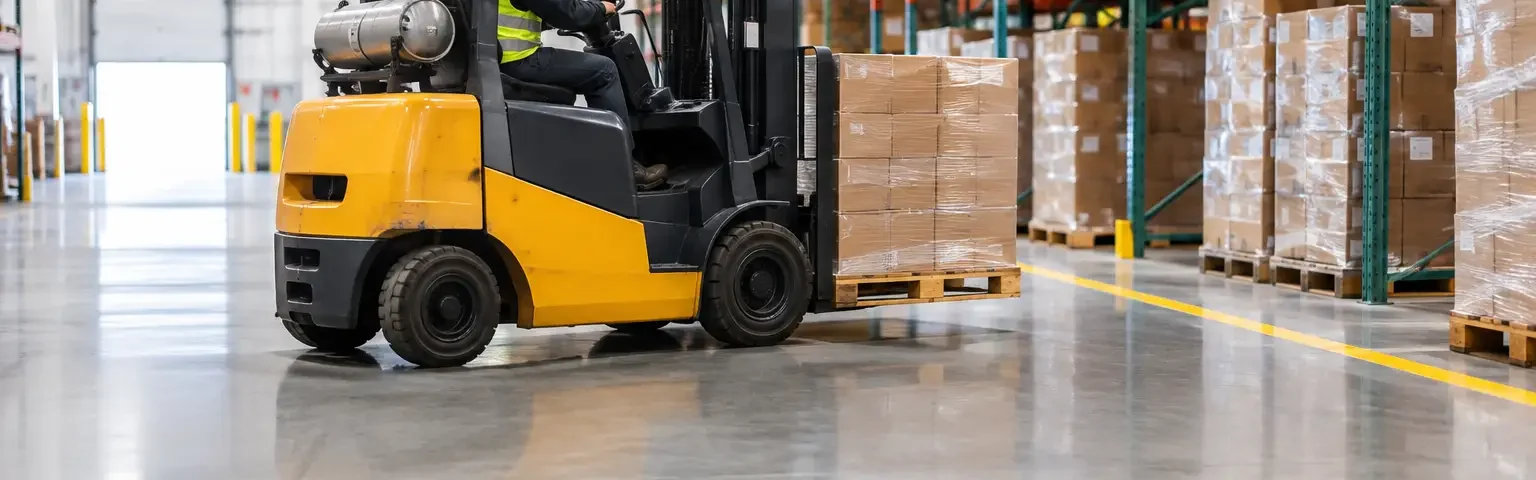
Forklift traffic floor coating is not a cosmetic upgrade for a warehouse or production floor. It is a performance decision that affects equipment movement, employee safety, sanitation, maintenance costs, and the service life of the concrete below it. A floor that looks acceptable under light foot traffic can fail quickly when loaded forklifts repeatedly brake, turn, stage pallets, and travel the same paths every shift.
The right system starts with an honest evaluation of what the floor is handling. Forklift weight matters, but wheel type, load weight, travel patterns, turning zones, moisture exposure, chemicals, and existing concrete damage all affect the recommendation. Applying a generic coating over weak concrete or poor preparation may create a short-lived finish that peels, cracks, or wears through where the operation needs it most.
Why Forklift Traffic Damages Concrete Floors
Forklifts place concentrated, repetitive stress on a slab. Solid tires and loaded wheels transfer substantial pressure into a relatively small contact area. That pressure is especially destructive at doorways, rack aisles, battery charging areas, loading docks, intersections, and pallet staging zones.
Straight-line traffic causes abrasion, but turning traffic is often the bigger problem. When a forklift pivots under load, its tires can twist against the surface. This scrubbing action wears away weak coatings, exposes aggregate, and can pull at poorly bonded repairs. Hard wheels, heavy loads, and frequent tight turns accelerate the damage.
Unprotected or deteriorated concrete can also dust under traffic. Fine concrete particles migrate into products, machinery, drains, and adjacent work areas. In food processing and commercial kitchen environments, that is more than a housekeeping issue. It can interfere with sanitation efforts and make it harder to maintain a clean, inspectable facility.
A Forklift Traffic Floor Coating Must Start Below the Surface
The coating itself is only one part of a durable flooring system. Surface preparation and concrete repair determine whether that system has a sound base to bond to. If oil contamination, weak laitance, failed patches, moisture pressure, or delaminated concrete remain in place, the new coating inherits those problems.
Professional mechanical preparation typically removes weak surface material and creates the proper concrete profile for the selected system. The required profile depends on the material being installed. Thin-film coatings, high-build resinous systems, urethane cement, and cementitious overlays do not all require the same preparation or achieve the same results.
Before coating begins, damaged areas should be addressed correctly. That can include routing and repairing cracks, rebuilding spalls, replacing failed patches, correcting joint damage, and removing unsound concrete. In facilities with slab movement, joint failures, or recurring structural deterioration, an engineer-led approach to industrial concrete repair may be necessary before any protective floor system is installed.
A new coating can improve the surface, but it cannot make unstable concrete structurally sound. Treating the symptoms without correcting the substrate often leads to the same failure pattern returning under the new finish.
Selecting the Right System for the Operation
There is no single best forklift floor coating for every commercial or industrial facility. The right answer depends on the operating environment and the condition of the slab.
Epoxy Systems for Dry, Abrasive Traffic
High-performance epoxy systems can provide a dense, cleanable surface for warehouses, manufacturing areas, distribution centers, and other primarily dry environments. When properly specified and installed over prepared concrete, epoxy can improve abrasion resistance, make cleaning easier, and provide color zoning or traffic markings.
However, epoxy has limitations. It can become slippery when wet unless texture is added, and it may not be the right selection for areas with frequent thermal shock, hot washdown, standing water, or severe chemical exposure. It also relies heavily on proper moisture evaluation and surface preparation.
Urethane Cement for Wet and Thermal Conditions
Urethane cement flooring is often a stronger fit where forklifts operate in wet, hot, cold, or aggressively cleaned conditions. Food processing plants, breweries, commercial kitchens, cold storage transitions, and beverage facilities commonly need more than basic abrasion resistance. They need a floor that can tolerate moisture, thermal cycling, sanitation chemicals, and demanding daily use.
Urethane cement can be installed at thicknesses suited to the service conditions and can incorporate a broadcast aggregate for increased traction. Texture must be selected carefully. Too little texture can create slip concerns in wet areas; too much texture can complicate cleaning and make wheeled equipment harder to roll. The goal is a surface that supports safe operation without creating an unnecessary maintenance burden.
Overlays and Restoration for Worn Concrete
If the concrete has widespread scaling, erosion, pop-outs, or surface breakdown, a coating alone may not be enough. A restoration system or industrial overlay may be needed to rebuild the traffic surface before a protective finish is applied. This is particularly relevant where forklifts have already worn the slab unevenly or where prior repairs have failed under traffic.
Polished concrete can also be an appropriate option in certain dry warehouse and retail settings. It is not a universal answer for heavy industrial service, but a properly densified and maintained polished floor can offer improved wear characteristics, reduced dusting, and a clean appearance where wet processing, chemicals, and thermal shock are not primary concerns.
Pay Attention to Traffic Patterns, Not Just Square Footage
A floor specification should be based on where forklifts actually travel, turn, stop, and load. The highest-risk areas are rarely spread evenly across the building. Aisle intersections, rack ends, dock approaches, production entrances, and charging stations may need more extensive repair, thicker material, or added traction than low-traffic storage areas.
This does not always mean the entire facility needs the same system. A practical flooring plan may use targeted concrete restoration in the most damaged zones, a high-build traffic coating in dry operating areas, and urethane cement in wet process rooms. Matching the system to each zone can control project cost without compromising the areas that carry the greatest operational stress.
Facility managers should also consider shutdown requirements. Some systems can be installed in phases to keep critical operations moving, while others need additional cure time before forklifts can return to service. Rushing traffic back onto an uncured floor can permanently mark or damage a new installation. Scheduling must account for preparation, repair cure times, installation, and return-to-service requirements.
Common Reasons Heavy-Traffic Coatings Fail
Most premature failures are not caused by forklift traffic alone. They result from a mismatch between the floor system, the concrete condition, and the environment. Common causes include inadequate surface preparation, coating over moisture-affected concrete, using thin materials where thicker protection is needed, and skipping crack or joint repairs.
Poor drainage creates another problem. If wash water, condensation, or process liquids remain on the floor, they can work into joints, cracks, and coating edges. In wet facilities, drainage design and floor slope should be part of the discussion rather than an afterthought.
Maintenance practices matter as well. Dragging pallets, allowing aggressive chemicals to dwell, and using unsuitable cleaning methods can shorten the life of any floor. A qualified contractor should explain what the completed system can handle, where it has limits, and how to maintain it without causing unnecessary wear.
What to Expect From a Proper Evaluation
A useful site evaluation looks beyond surface appearance. The contractor should ask about forklift types, wheel materials, maximum loaded weight, daily traffic volume, washdown procedures, chemicals, operating temperatures, downtime windows, and past floor failures. They should inspect cracks, joints, spalls, previous coatings, and signs of moisture-related distress.
For Tennessee manufacturing, warehouse, food-processing, and distribution facilities, seasonal humidity and slab moisture can be relevant to system selection. The assessment should identify those conditions before materials are chosen, not after a coating has begun to release from the floor.
The best forklift traffic floor coating is the one built around the operation, not the product that happens to be easiest to sell. When preparation, repair, material selection, thickness, and installation scheduling are aligned, the result is a floor that supports safe, efficient material movement and gives the concrete underneath a longer working life.
Need a commercial or industrial flooring solution? TKO Concrete Coatings provides concrete restoration and high-performance flooring systems for manufacturing plants, food-processing facilities, warehouses, commercial kitchens, breweries, and other demanding environments. Visit TKOConcrete.com to discuss your project or request an evaluation.
