
A failed floor rarely starts as a dramatic failure. It starts with open joints that catch pallet jacks, small areas of spalling near drains, coating loss beneath washdown equipment, or a rough patch that crews work around every day. In manufacturing, food production, warehousing, and commercial kitchens, those small defects quickly become sanitation concerns, safety hazards, and operational interruptions. Nashville industrial flooring has to do more than look finished. It has to perform under the actual conditions inside the facility.
The right system depends on what the floor sees every shift: forklift traffic, impact, standing water, cleaning chemicals, hot washdown cycles, oils, abrasion, point loads, or a combination of all of them. A coating selected without evaluating the concrete underneath it may look good at turnover and fail when production resumes. That is why flooring decisions should begin with the slab, the use case, and the cost of disruption.
What Industrial Floors Must Handle in Nashville Facilities
Middle Tennessee facilities can have widely different flooring demands, even within the same building. A warehouse aisle may need a hard-wearing, dust-resistant surface that stands up to constant forklift travel. A brewery needs protection from moisture, acids, sugars, and frequent cleaning. A food-processing room may need a sanitary, slip-conscious floor that tolerates thermal shock from hot-water washdowns and cold operating conditions.
The common mistake is treating every concrete floor as a coating project. Some floors need a high-performance resinous system. Some need grinding, densification, polishing, or sealing. Others need concrete restoration first because the real problem is deteriorated substrate, failed joints, moisture movement, or structural distress. The finish is only as reliable as the concrete and preparation work below it.
Facility managers should also consider how the floor affects operations. An overly aggressive texture can make sanitation harder. A surface with too little texture can become unsafe when wet. A repair material that is not compatible with the surrounding slab may crack or debond under traffic. There is no single best industrial floor, only the system that fits the exposure and operating requirements.
Start With Concrete Condition, Not a Product
Before specifying a finish, inspect the concrete for signs of failure. Cracks, joint breakdown, delamination, scaling, pop-outs, moisture vapor issues, and uneven areas each point to different repair needs. If a forklift wheel repeatedly impacts a damaged joint, applying a thin coating over it will not solve the underlying movement or edge failure.
A practical evaluation considers the age and condition of the slab, traffic patterns, chemical exposure, drainage, cleaning methods, temperature swings, and required downtime. It should also identify whether cracks are static or active and whether the floor needs to remain operational during the work. In an active plant, a technically sound system that requires an unrealistic shutdown is not a complete solution.
Industrial concrete repair is often the first step. Proper repair may include removing unsound concrete, rebuilding failed areas with compatible materials, restoring joint edges, correcting transitions, and addressing localized slab damage before the final flooring system is installed. For more complex deterioration or structural concerns, engineer-led assessment helps separate cosmetic defects from conditions that need a more deliberate repair plan.
Preparation Determines Service Life
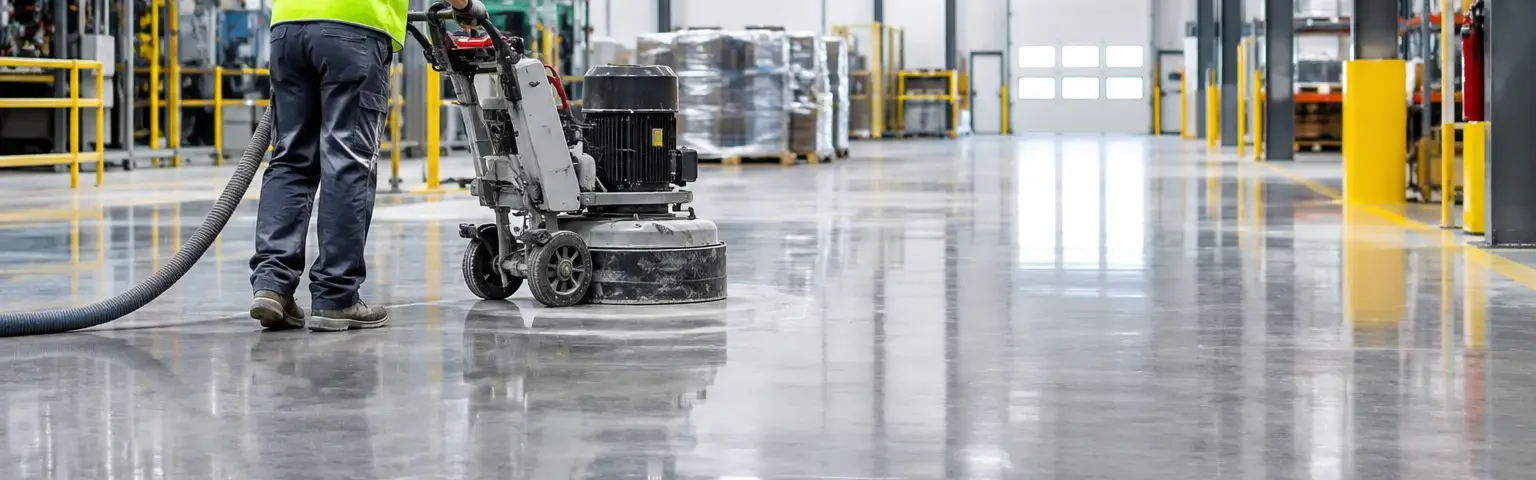
Surface preparation is where industrial flooring projects are won or lost. Concrete can hold contaminants, laitance, prior coatings, oils, curing compounds, and weak surface material that prevent a new system from bonding properly. Mechanical preparation such as diamond grinding or shot blasting creates the required surface profile and exposes sound concrete.
Preparation also reveals problems that were hidden under old coatings or surface dirt. Moisture-related defects, weak patches, and abandoned repairs often become visible only after the floor is opened up. Addressing them at this stage is less expensive and less disruptive than repairing a failed system later.
The goal is not simply to make the concrete look clean. The goal is to create a stable, properly profiled surface that can accept the selected material and remain bonded under the facility’s normal load and exposure conditions.
Choosing Nashville Industrial Flooring by Exposure
A flooring recommendation should be based on what attacks the floor, not on what material is most familiar. Several systems can serve industrial environments, but each has a different role.
Urethane Cement for Wet, Thermal, and Sanitary Areas
Urethane cement flooring is a strong choice for demanding food and beverage environments, commercial kitchens, breweries, processing rooms, and washdown areas. It is designed for conditions that are hard on conventional coatings, including moisture, temperature change, organic acids, cleaning chemicals, and heavy use.
Its value is especially clear where thermal shock is a concern. A floor exposed to hot wash water, steam, or rapid temperature shifts needs a system that can move more compatibly with the concrete below it. The correct thickness, texture, cove details, and drainage coordination still matter. A good material cannot compensate for poor slope or inadequate surface preparation.
For food processing flooring, sanitary detailing deserves as much attention as chemical resistance. Integral cove bases, properly treated drains, sealed transitions, and a cleanable texture help reduce areas where contaminants and moisture can collect. The final surface should support the facility’s sanitation program rather than complicate it.
Polished Concrete for Dry, High-Traffic Operations
Polished concrete can be an effective option for warehouses, distribution centers, retail-adjacent industrial spaces, and manufacturing areas that are generally dry. It improves light reflectivity, creates a dense and easier-to-maintain surface, and can reduce concrete dusting when the existing slab is suitable for polishing.
It is not the right answer for every industrial setting. Polished concrete is not intended to solve severe chemical exposure, persistent standing water, or active slab failure. If the concrete is heavily damaged, contaminated, or uneven, restoration and preparation may be required before polishing is practical. In some cases, a different high-performance flooring system is the better long-term decision.
Sealed and Restored Concrete for Working Floors
For facilities that need to control dust, improve cleanability, and extend the life of serviceable concrete, concrete sealing and targeted restoration can offer a practical approach. This may make sense in utility areas, warehouses, equipment rooms, and portions of a plant that do not require a thick resinous system.
The key word is serviceable. A sealer helps protect an intact substrate; it is not a structural repair product. Where concrete is breaking down under wheels, impact, or chemical attack, repair the damaged areas before deciding whether a sealer, polish, or coating belongs on top.
Plan Installation Around Operations
The best flooring scope accounts for production schedules before crews arrive. Facilities often cannot release an entire area at once, so work may need to be phased by room, aisle, production line, or shift. Access routes, equipment movement, cure times, odor concerns, and sanitation requirements should be resolved during planning rather than on the installation day.
This is particularly important for occupied plants and food-related environments. The contractor needs to understand containment expectations, shutdown windows, cleaning protocols, and how finished work will be protected from traffic before it reaches full cure. Coordination with maintenance teams, plant leadership, general contractors, and other trades reduces avoidable delays and helps protect the finished floor.
A lower initial price can become costly if it ignores downtime, recurring repairs, or early replacement. The better comparison is lifecycle value: how long the system should perform, what maintenance it needs, how it affects safety and sanitation, and what a failure would cost the operation.
Floor Maintenance Is Part of the System
Even a well-installed industrial floor needs appropriate maintenance. Regular inspections can catch failing joint sealant, localized impact damage, coating wear, and drainage issues before they expand. Cleaning chemicals and methods should match the flooring system, particularly in food, beverage, and commercial kitchen settings where aggressive cleaning is routine.
Maintenance teams should document recurring damage. If the same joint fails repeatedly or the same traffic lane wears early, the issue may be vehicle loading, wheel type, traffic pattern, or an underlying slab condition rather than a simple surface problem. Those patterns provide useful information for a more durable repair.
A floor that supports safe traffic, efficient sanitation, and predictable maintenance is not a cosmetic upgrade. It is part of the facility’s operating infrastructure.
Need a commercial or industrial flooring solution? TKO Concrete Coatings provides concrete restoration and high-performance flooring systems for manufacturing plants, food-processing facilities, warehouses, commercial kitchens, breweries, and other demanding environments. Visit TKOConcrete.com to discuss your project or request an evaluation.
