
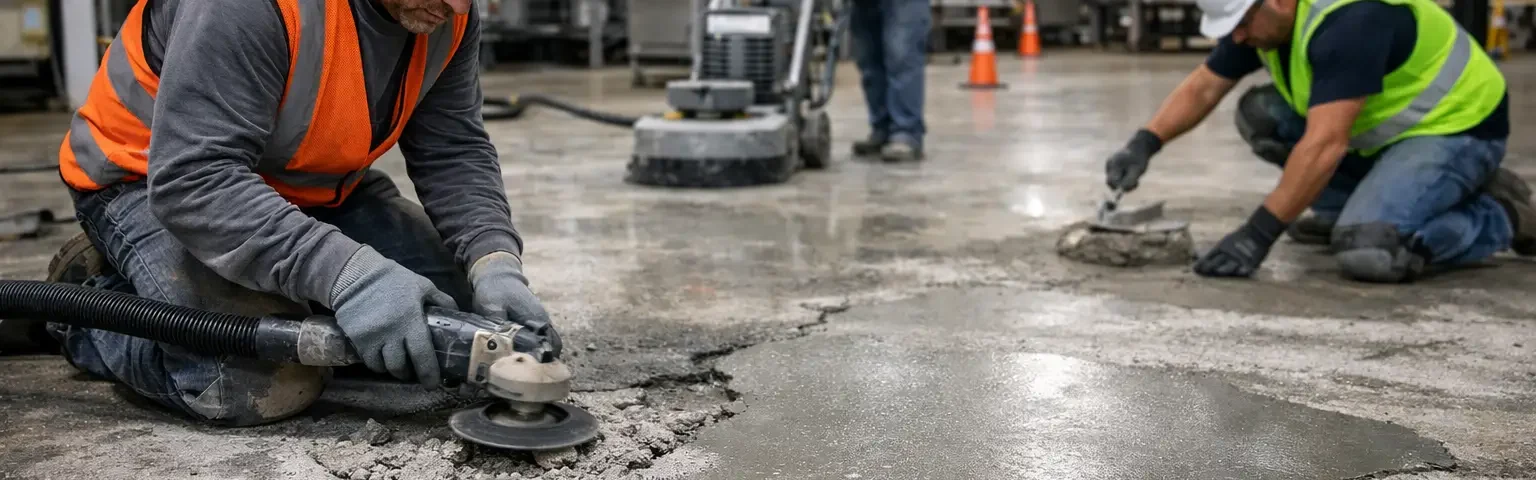
A forklift route begins to feel rough. A coating loses adhesion in isolated areas. Hollow-sounding spots appear after a washdown or thermal cycle. These are not cosmetic issues to watch from a distance. They can be early signs of a slab losing integrity. Knowing how to prevent concrete delamination starts with recognizing that the visible failure is usually the result of conditions created much earlier – during mix design, placement, curing, finishing, or years of facility operation.
For industrial and commercial facilities, delamination can interrupt production, create sanitation concerns, damage equipment, and shorten the service life of a new flooring system. The right prevention plan is not a single product or repair method. It is a disciplined approach to moisture, concrete placement, surface preparation, and ongoing floor maintenance.
What Concrete Delamination Looks Like
Concrete delamination occurs when a thin layer of concrete separates from the sound material beneath it. The affected area may remain in place initially, but it no longer has reliable bond strength. Over time, traffic, impact, thermal movement, washdown water, and chemical exposure can cause that layer to crack, spall, or break away.
In a warehouse or manufacturing plant, delamination may show up as loose surface material along travel lanes, around joints, or near equipment pads. In food processing facilities and commercial kitchens, it can become more obvious where frequent washdowns, hot water, and sanitation chemicals work their way into weak areas. A hollow sound when the floor is chain-dragged or tapped is a common diagnostic clue, but it is not a complete evaluation by itself.
Delamination should not be confused with ordinary surface wear. Abrasion wears concrete from the top down. Delamination means the floor has lost internal bond below the surface. That distinction matters because coatings and patch materials applied over unsound concrete will often fail with it.
Control Bleed Water Before Finishing
One of the most common causes of early delamination is finishing a slab while bleed water is still present. As fresh concrete settles, water rises toward the surface. If crews begin troweling before that water has evaporated, they can trap a weak layer beneath a densified surface. The slab may look acceptable at turnover, then separate under traffic or environmental stress.
Scheduling pressure is real on commercial projects, especially when a facility expansion has a fixed equipment-installation date. But accelerating finishing at the wrong time creates a costly trade-off. A few hours saved during placement can become weeks of repair work after the slab is in service.
The placement team should watch the concrete, not the clock. Finishing must begin only after bleed water is gone and the slab has reached the proper condition for the specified finish. This becomes even more important with mixes that contain supplementary cementitious materials, water reducers, fibers, or other admixtures that affect set time and bleed behavior.
Use a Mix Design That Fits the Facility
Concrete is not one-size-fits-all. A distribution center with heavy forklift traffic has different demands than a brewery with acid exposure and frequent moisture. A food processing facility may require resistance to thermal shock, aggressive cleaning, and constant sanitation. The mix design, slab thickness, reinforcement strategy, joint layout, and final flooring system all need to match those conditions.
Excess water is a frequent contributor to weak concrete. Adding water at the jobsite can make placement easier, but it can also reduce strength, increase shrinkage, and raise the risk of surface-related failures. The specified water-cement ratio should be controlled, and any adjustments should be managed through the approved mix design rather than improvised in the field.
Air content also deserves attention. Air-entrained concrete can be appropriate for certain exposure conditions, but overworking an air-entrained slab during finishing can contribute to delamination. The project team should coordinate the mix and finishing requirements before placement, particularly where hard-troweled floors, floor coverings, or resinous systems are planned.
Place and Finish Concrete Without Trapping Weak Layers
Proper consolidation is necessary to remove unwanted entrapped air and achieve consistent concrete around reinforcement and embedded items. Over-vibration, however, can contribute to segregation in some conditions. The goal is controlled consolidation, not indiscriminate vibration.
Finishing should be matched to the intended floor system. A dense, hard-troweled surface may be appropriate for some industrial slabs, while a floor receiving urethane cement flooring requires an adequately prepared surface profile for mechanical bond. A surface that is too smooth, contaminated, weak, or moisture-compromised can undermine a high-performance flooring installation before it begins.
Avoid finishing practices that artificially close the surface. Sprinkling dry cement on a slab, adding water to aid troweling, or excessive troweling can create weak surface zones and hide problems until the floor is loaded. On critical industrial projects, the finishing plan should be established in advance and monitored throughout the pour.
Cure the Slab for Strength, Not Just Appearance
Curing allows cement hydration to continue, which supports strength development, wear resistance, and durability. If a slab dries too quickly, the near-surface concrete can become weak, prone to cracking, and less capable of supporting traffic or bonded flooring systems.
Curing methods need to align with what comes next. Some curing compounds can interfere with coatings, overlays, and adhesives if they are not fully removed during surface preparation. Where polished concrete, urethane cement, or another bonded system is specified, the flooring contractor and concrete contractor should coordinate curing requirements early.
Temperature and environmental control also matter. Hot, dry, or windy conditions increase evaporation. Cold conditions slow hydration and extend set times. In Tennessee facilities where construction schedules can span changing weather conditions, protecting fresh concrete from rapid moisture loss and temperature extremes is part of quality control, not an optional extra.
Keep Moisture and Vapor Pressure in Check
Moisture is a major cause of flooring failures, but it is not always visible on the slab surface. Moisture vapor moving through concrete can weaken bond lines, contribute to coating blisters, and worsen existing delamination. Water entering through failed joints, drainage issues, leaking equipment, or repeated washdown cycles can also infiltrate cracks and separated layers.
For slabs receiving a resinous or cementitious flooring system, moisture testing should be part of preinstallation evaluation. The appropriate test method depends on the system, slab age, site conditions, and manufacturer requirements. A moisture mitigation system may be appropriate in some situations, but it cannot turn unsound concrete into sound concrete. Delaminated material still needs to be removed and repaired before new flooring is installed.
In wet-process environments, drainage design deserves equal attention. Standing water creates safety concerns and places constant stress on concrete and floor coatings. Correct slopes, functional drains, sealed penetrations, and properly repaired joints help keep moisture out of vulnerable areas.
Protect Joints, Repairs, and High-Stress Areas
Many delamination problems begin or accelerate at joints, transitions, and previous repairs. Forklift wheels repeatedly strike joint edges. Water and cleaning chemicals enter open joints. Differential movement breaks down rigid patch materials. Once an edge starts to fail, surrounding concrete can deteriorate quickly.
Joint repair should account for the type of traffic and expected movement. A repair that looks clean on day one may fail early if it is too rigid for an active joint or too soft for hard-wheel traffic. The same principle applies to concrete patching. The repair material, edge preparation, thickness, and cure schedule must fit the service conditions.
High-stress zones deserve focused inspections: loading docks, battery charging areas, wash bays, freezer transitions, processing lines, doorways, and primary forklift travel lanes. Repairing small defects before water, impact, and traffic enlarge them is far less disruptive than replacing a broad failed section during production.
How to Prevent Concrete Delamination Before New Flooring
Before installing polished concrete, urethane cement flooring, or another commercial flooring system, the slab must be evaluated for soundness. Surface preparation is not simply cleaning the floor. It means mechanically removing weak concrete, contaminants, failed coatings, and laitance until sound substrate is exposed.
Grinding, shot blasting, scarifying, and other preparation methods each have a place. The right method depends on the slab condition, repair scope, specified flooring system, and required surface profile. If testing identifies widespread delamination, localized patching may not be enough. The facility may need a broader restoration plan that removes failed concrete, rebuilds damaged areas, and installs a system designed for the environment.
This is where engineer-led industrial concrete repair can protect the long-term investment. The cause of failure should be addressed before the finish system is selected. For example, a wet food-processing area may benefit from urethane cement because it handles moisture, thermal cycling, and aggressive service conditions well. A dry warehouse with sound concrete may be better suited to polished concrete or a targeted sealing and maintenance program. The recommendation depends on the substrate and the work the floor must perform.
Build Delamination Prevention Into Facility Maintenance
Even a well-constructed floor needs regular attention. Maintenance teams should document recurring damp areas, coating wear, cracking patterns, joint damage, and changes in traffic routes. These observations can reveal a developing issue before the floor becomes unsafe or operations are affected.
Avoid pressure washing damaged joints or cracked areas without a plan for water control. Address leaks promptly. Keep drains functional. Review traffic patterns when equipment loads or wheel types change. When a new production line, washdown process, or chemical is introduced, reassess whether the existing floor system remains appropriate for the exposure.
Need a commercial or industrial flooring solution? TKO Concrete Coatings provides concrete restoration and high-performance flooring systems for manufacturing plants, food-processing facilities, warehouses, commercial kitchens, breweries, and other demanding environments. Visit TKOConcrete.com to discuss your project or request an evaluation.
